Most people who tell us they are “tight” do not need to stretch more. They need to move their joints through a fuller range, under control, often enough that the body decides the range is safe to keep.
Stretching is a sensation. Mobility is a skill.
A passive stretch can feel productive because it creates a strong sensation. But sensation is not the same as change. If you spend the rest of the day in the same chair, the same car and the same collapsed posture, thirty seconds of pulling on a hamstring is a very small argument with a very loud environment.
Mobility work asks a different question: can you get into the range, control it, and then use it under load? That is why a good mobility session looks less like a yoga class and more like a series of small, deliberate tests.
Start with the joints that complain in the squat
When a squat feels stuck, the limitation is usually not one muscle. It is a conversation between ankles, hips and the upper back. If the ankle cannot bend forward, the hip has to do more. If the hip cannot rotate, the lower back takes over. If the upper back cannot extend, the bar drifts forward.
- Ankles: try a knee-to-wall rock with the heel down. Notice whether the knee travels over the toe without the foot rolling in.
- Hips: try a half-kneeling hip rotation, moving slowly and breathing at the end of the range.
- Upper back: try a bench-supported thoracic opener with a light weight, keeping the ribs down.
- Deep squat: hold a supported squat and shift side to side rather than sitting still.
None of these need to be heroic. Two or three minutes each, most days, beats a forty-minute routine once a month.
Then put load on it
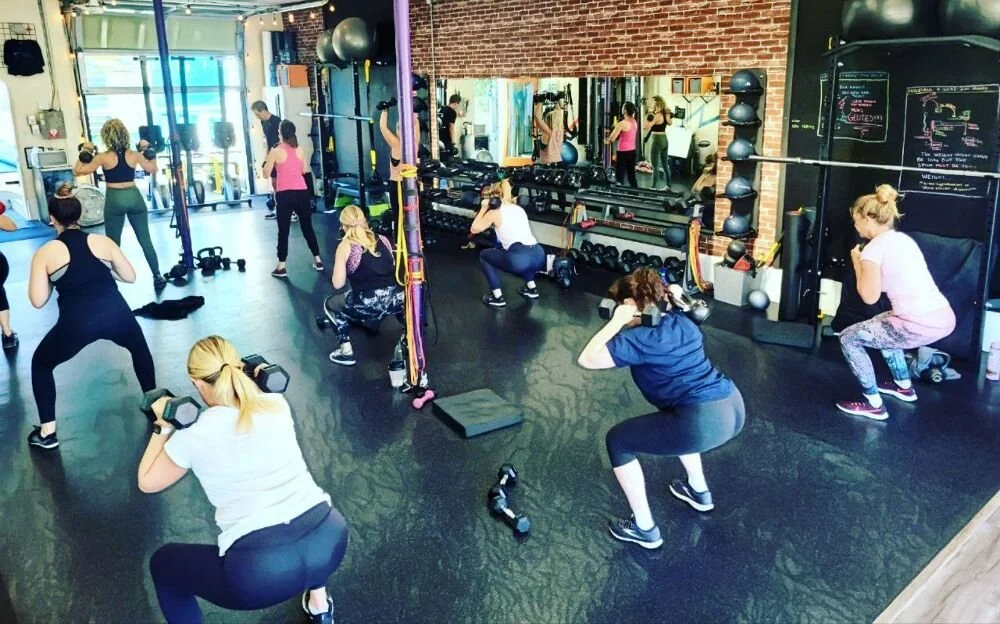
Range that is never loaded tends to disappear. After you open a joint, use it: a goblet squat, a split squat, a press, a hinge. Keep the load modest enough that you can still breathe and keep position. The goal is not to prove the new range exists; it is to teach the body that the range is useful.
If you can find the range but cannot control it, you have borrowed it, not built it.
Make it a habit, not a project
The most effective mobility practice is the one that fits the life you already have. Tie it to something that happens every day: before your coffee, after your walk, between work calls. Pick two areas, not twelve. Re-test the same movement every couple of weeks instead of chasing a new drill.
If a joint is painful, unstable or getting worse rather than simply stiff, that is a different conversation. At EWB, injury support is part of the coaching approach — a coach can help you work around a limitation and rebuild capacity rather than forcing a range that is not ready.
Mobility is not a separate hobby from strength. It is one of the qualities strength training depends on. Spend a little time there and your squats, carries and runs tend to get easier — not because you stretched harder, but because you finally gave the body somewhere to go.
Find your format
Answer five questions and get a sensible starting point: personal training, small groups, recovery work or nutrition support.